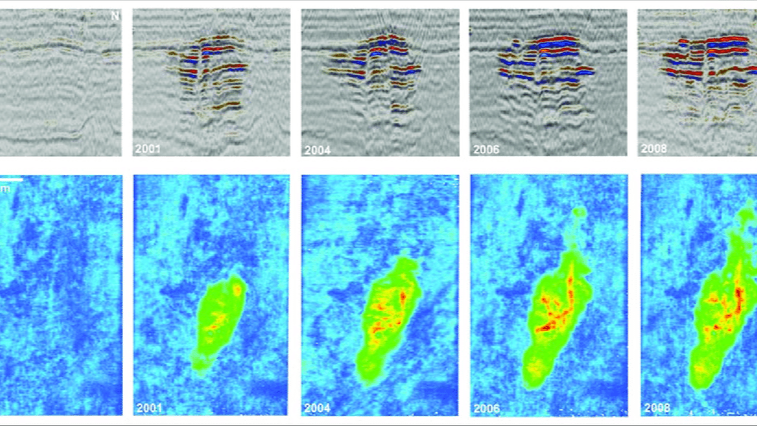
A few weeks ago, Harbour announced the successful Havstjerne CCS exploration well (Southern Norwegian Sea, license EXPL-006) (link). Back before leaving Wintershall Dea, I provided some support for this asset’s exploration plan.
What defines a successful CCS exploration well? Proving a reservoir with suitable properties for injection and storage of liquid CO2, bounded by sufficient caprock and seals to ensure integrity for decades to come. Harbour announced the vertical “discovery” well encountered more than 150m of homogeneous shale and dense siltstone to serve as an effective caprock, followed by ~150m of good or moderate quality reservoir sandstone. After drilling, “an injection test had positive results,” indicating likely positive conditions for future CO2 injection and storage.
Geophysics is essential to all aspects of CCS. Fortunately, the fundamental laws of physics and geology never vary, so tools and workflows developed for O&G are often well suited for CCS.
Here’s a brief overview of key geophysical considerations for CCS. (Disclaimer: these are not specific to Havstjerne, but are typical for CCS support.)
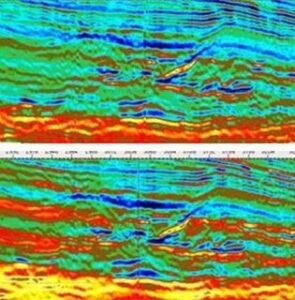
— Is the available seismic data suitable for the project? Was the data acquired for CCS, or is it a legacy O&G survey? Are the acquisition parameters suitable for the required frequency content and resolution? Is the velocity analysis and migration suitable for accurately mapping the subsurface structures, faults, etc.? Is the depth image accurate? Is additional conditioning (denoise, demultiple, etc.) required?
— Seismic coverage and quality must be sufficient not just for the “reservoir” itself but also the overburden and surrounding areas which are critical to assessing CO2 containment potential.
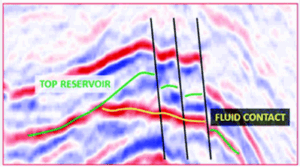
— Once the data is validated, then comes seismic interpretation to assess and map suitable formations to inject and store CO2. This may involve attributes like Coherence and Curvature to help understand faults and fractures in the prospective reservoir, and to map potential plume migration and leakage pathways.
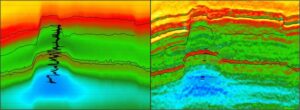
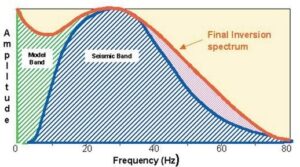
— Seismic Inversion will derive reservoir properties like porosity, permeability, and fluid saturation, to help derisk the reservoir’s presence and quality.
— Once the prospect has been sufficiently mapped and characterized, CO2 injection may occur. Almost immediately afterwards, time-lapse seismic is required to monitor plume migration, and to detect any leakage through the caprock. With the initial 3D as baseline, a new monitor acquisition should follow ASAP.
— With 4D analysis, changes in amplitudes, inverted impedance and velocity are key. Monitoring the injected plume and ensuring reservoir containment will continue for decades, so multiple monitor acquisitions (with continuous analysis) will be required.
— AVO attributes are particularly useful, as the presence of CO2 in the reservoir can alter rock properties and seismic responses. How these change over time can indicate potential leakage.
— Spectral Decomposition (analysis of the frequency content of the seismic) can also identify subtle changes related to injection and migration.
— Non-seismic methods include gravity and magnetics for initial mapping of suitable formations, and EM techniques to map the conductivity signatures of saline reservoirs which might be suitable for injection.
— My experience is primarily offshore, but for onshore CCS, passive seismic monitoring can also contribute to monitoring plume migration and integrity.
CCS is still a relatively new operation for our industry’s Geophysics community, so new tools and workflows are continuously under development. Also with a critical influence is the global and regional political will to continue investing in carbon sequestration. This is dependent upon economics, public policy, social support, etc. Will CCS still be an active industry a decade from now? Time will tell – but if yes, geophysics will be essential.
Here are some good background resources.
Gaffney Cline [2022], The Importance of Geophysics and Seismic Analysis in CCUS Projects, www.gaffneycline.com
Wendt, et al. (2022), A multi-criteria CCUS screening evaluation of the Gulf of Mexico, Greenhouse Gas Control
Hansen, et al. [2013], Snøhvit: The history of injecting and storing 1 Mt CO2 in the fluvial Tubåen Fm, Energy Procedia, 37
Quantitative analysis of time-lapse seismic monitoring data at the Sleipner CO2 storage operation
Osdal B., et al. [2014], Snøhvit CO2 Monitoring Using Well Pressure Measurement and 4D Seismic, EAGE